Debt recycling: getting the loan structure right before your adviser's strategy starts
Debt recycling is your adviser's strategy. The loan structure is ours. How splits, offset and redraw work, and what to set up before the strategy starts.
General information only. This explains the loan structure, not whether debt recycling suits you. This isn't tax advice, so talk to your accountant before you start.
Debt recycling gets talked about as a tax and investment strategy, and that's what it is. That side belongs with your financial adviser and your accountant. But whether it works in practice often comes down to something much less exciting: how the loan is set up.
Get the structure wrong and the strategy can unravel quietly. Nobody notices until tax time, or until the accountant asks for statements that can't untangle what the money was used for.
Who this is for: homeowners with equity whose planner has raised debt recycling, or might. It's also for advisers who want a plain explainer of the lending side to send their clients.
Debt recycling in one paragraph
You pay money off your home loan, then borrow the same amount back through a separate loan and invest it. Your total debt stays about the same. What changes is what the debt is for. Interest on your home loan generally isn't tax-deductible. Interest on money borrowed to invest may be. Repeat the cycle over time, and more of your debt sits on the investment side.
That's the idea. The strategy is your adviser's call. Our part is the loan structure that makes it trackable.
Why the structure is the part that breaks
For tax purposes, what matters is generally what the borrowed money is used for, not what the property is or which loan it sits in. Your accountant will put it more precisely. In practice, the structure has to do one job: keep a clear, simple trail from the investment loan to the investment, with nothing personal mixed in.
That's harder than it sounds. A single loan account used for both purposes is very hard to unpick later. So we set it up so you never have to.
The structure in one picture: two splits
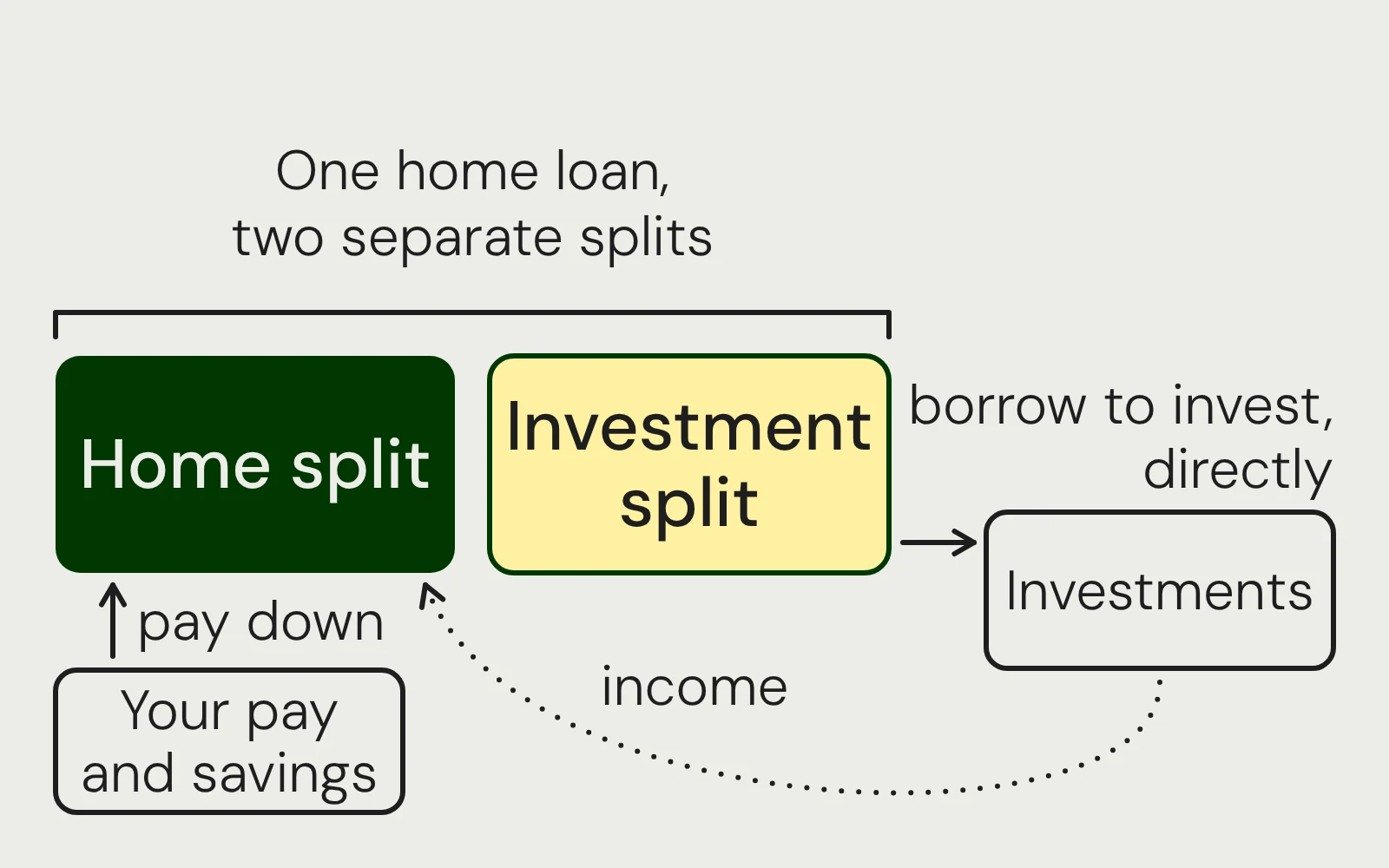
Most lenders let you divide one home loan into separate splits. Each split has its own account number, its own balance and its own statements.
Split 1: the home split. This is your existing home loan, the debt you pay down.
Split 2: the investment split. It's used only to buy investments. Nothing else ever goes through it.
Before you start, check whether your lender:
lets you split the loan, and how many splits it allows
charges a fee for setting up or changing splits
has limits on how often you can change them
Some lenders handle this well and some don't. That's often the first thing we look at.
The order things happen in
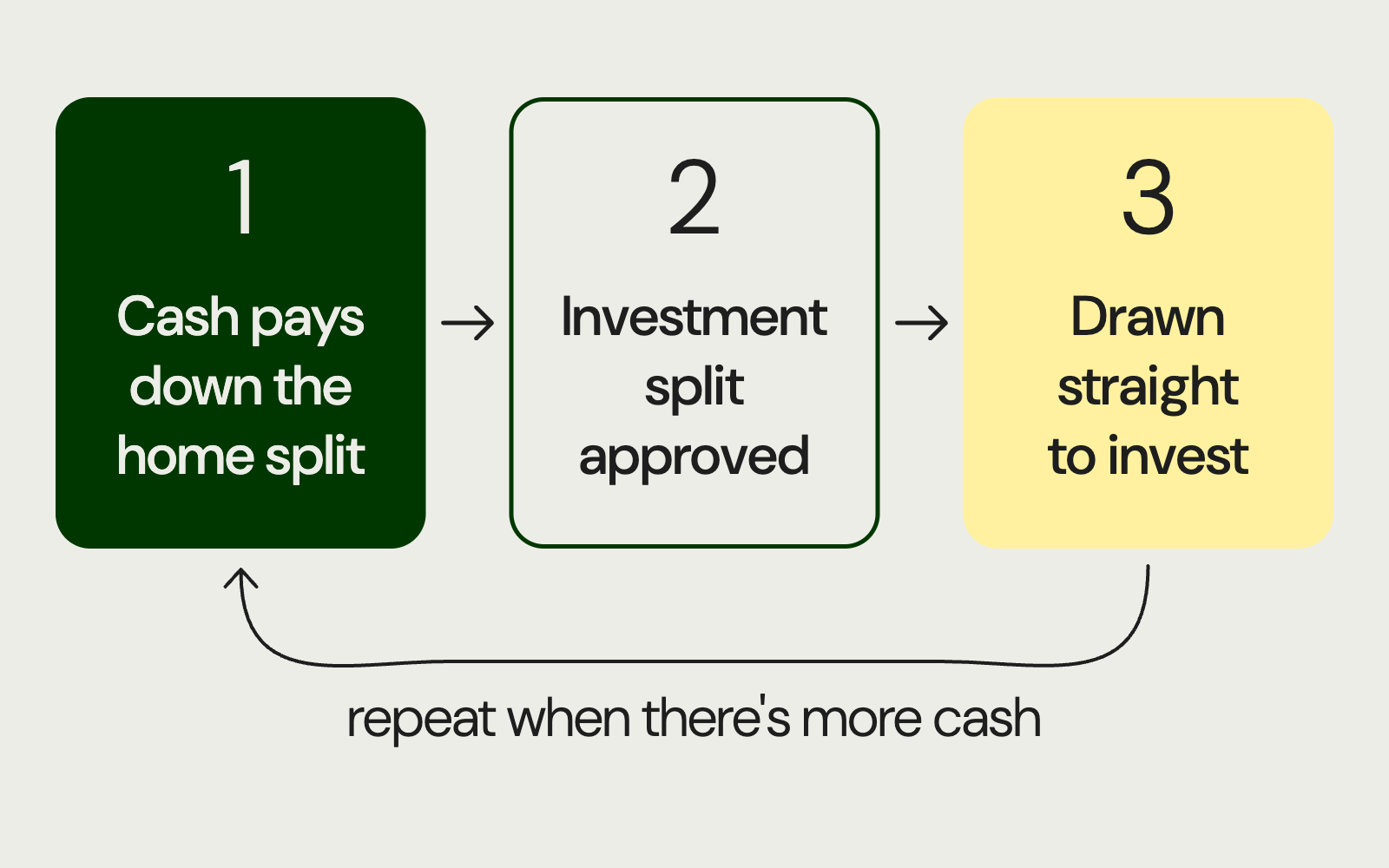
The order matters, so here it is step by step.
Cash pays down the home split first. That cash might be savings, a bonus, or money sitting in your offset. The home split's balance drops.
The investment split is set up, or increased, by the same amount. The lender has to approve it, like any other loan.
The new investment split is drawn to invest. The money goes straight from the investment split to the investment account, and nowhere else.
Repeat when there's more cash. Each round, the home split gets smaller and the investment split gets bigger. The total stays about the same.
Keep the splits clean
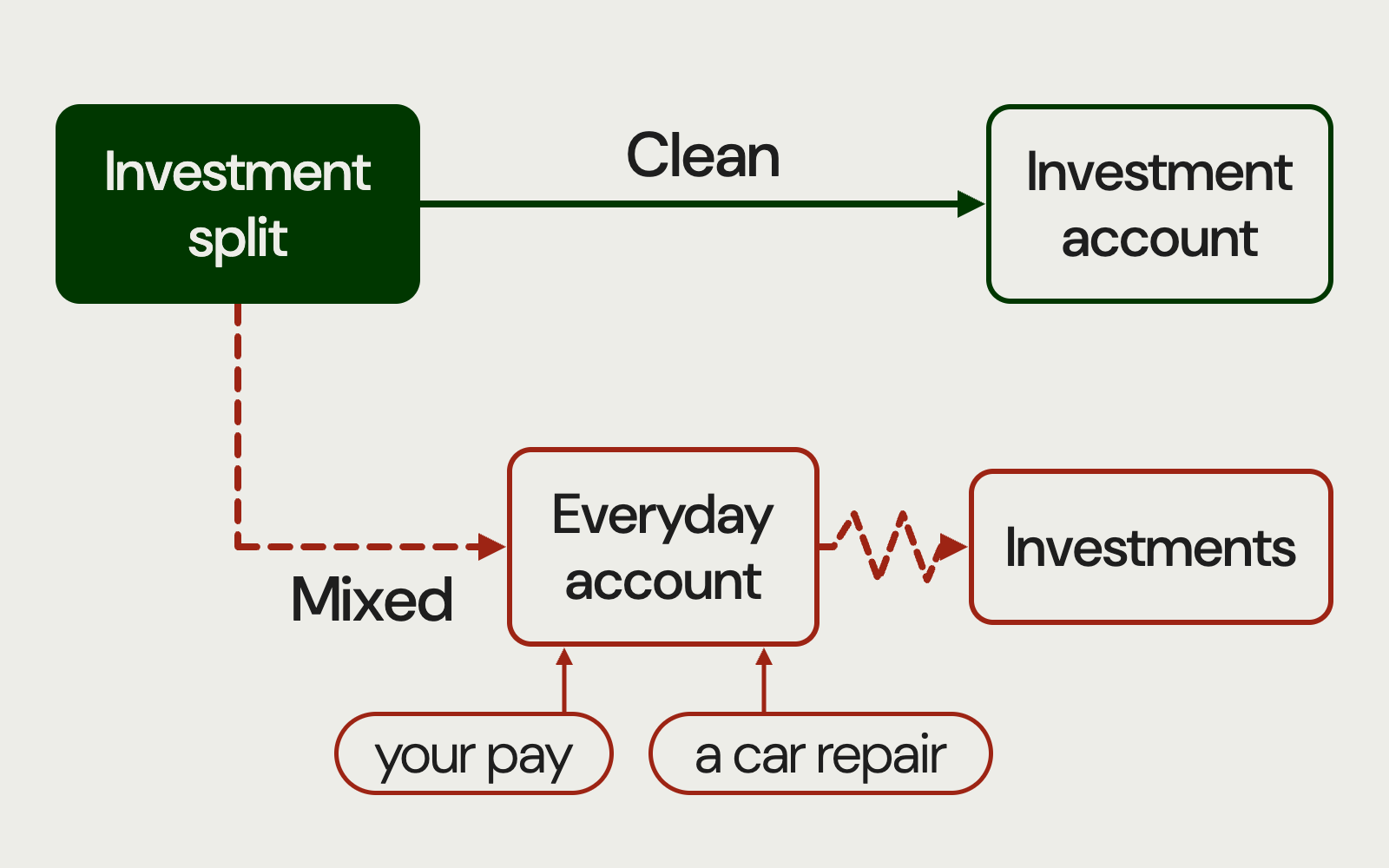
This is where good intentions go wrong. The investment split should only ever pay for investments.
Here's what "contamination" looks like. You draw $20,000 from the investment split for shares, but it lands in your everyday account first. You buy the shares, then pay a car repair from the same account the same week. Now the trail is muddy, and your accountant has a harder job.
The habits that keep it clean:
Draw from the investment split straight to the investment platform or account, never via your everyday account.
Never use the investment split for anything personal, even "just for a week".
Keep the statements. They're the trail your accountant will need.
Offset or redraw: where the money sits
Both can be useful. They work differently, and the difference matters here.
Offset: money in an offset account is still your savings. It reduces the interest charged on the linked loan, but you haven't repaid anything. Taking it out doesn't create new borrowing.
Redraw: money in redraw has been paid off the loan. Taking it back out is generally treated as new borrowing, and what you use it for can matter for tax. Your accountant can confirm how that applies to you.
So which account sits against which split matters. We'll talk it through with you and your adviser before anything is set up.
Interest-only or principal and interest on the investment split
You'll hear both. Here's the trade-off in plain terms. We're describing it, not recommending either.
Interest-only keeps the repayment on the investment split lower for a set period, so more of your cash can go to the home split. But the investment balance doesn't come down. Repayments rise when the interest-only period ends, and you'll usually pay more interest over the life of the loan.
Principal and interest pays the investment debt down too. The repayment is higher, and less cash is free for the home split.
Lender policy on interest-only varies. It's assessed like any other loan, and it's not available for every borrower or every purpose.
What the lender looks at
The investment split is a loan like any other. The lender assesses it, so it isn't automatic. Before you start, expect them to look at:
Your equity. The lender values the property. If total borrowing would go above 80% of the value, lenders mortgage insurance (LMI) may apply. LMI protects the lender, not you.
Your income and expenses. The lender checks you can repay the whole facility, including the investment split, at a higher test rate.
The purpose. Some lenders ask what you'll invest in, and some have limits on investment lending.
The price. The investment split is an investment-purpose loan, and many lenders price that higher than an owner-occupied home loan. So moving debt from the home split to the investment split can change what it costs you each month. That's part of your cost to carry, and we'll show you the difference before anything is set up.
This cuts both ways
Debt recycling is borrowing to invest, so the risks need saying plainly.
Investments can fall in value, and the debt stays. You could owe more than your investments are worth.
Income can drop. If your pay falls or rates rise, you still carry the whole facility.
Tax benefits depend on your situation. They only help if you have income to use them against, and the rules can change.
It takes discipline for years. One messy transaction can create a problem that's hard to fix.
Sometimes the better answer is to pay down the home loan and leave it there. If that's the case, we'll say so.
Where your adviser and accountant fit
Your financial adviser decides whether debt recycling suits you, what to invest in and how much.
Your accountant tells you what you can deduct and keeps the records right.
We set up the loan structure, check lender policy and make sure the splits and offset are in the right places. Then we keep the structure tidy as the strategy runs.
We work alongside your adviser, not around them. With your consent, we keep them updated at each step.
Before you start: a checklist
Your adviser has discussed debt recycling with you
Your accountant has confirmed the tax side for your situation
Your lender allows splits, and you know the fees and any limits on changes
There's a separate investment split that never touches personal spending
Investment draws go straight to the investment account
You know which split any offset is linked to
You've decided interest-only or principal and interest with your adviser, knowing the trade-off
You have a buffer for a rate rise or an income drop
You know where you'll keep the statements
Your adviser can model the strategy with your own numbers. We'll make sure the loan structure can carry it. See how we work for what that looks like from first call to settlement.
What happens next
Talk to your adviser about whether debt recycling suits you.
Have your latest loan statement handy, plus a rough idea of what you'd invest and how.
Book a 30-minute call. We'll look at your current loan and what the structure would need. If your adviser wants to join, even better.
Most clients pay us nothing. We're usually paid by the lender. If a fee ever applies, we'll quote it upfront and you'll agree to it before we start.
Talking to your adviser about debt recycling? Book a 30-minute call and we'll get the loan structure right with them.
No. You might restructure or refinance to set it up, but debt recycling is the ongoing strategy of paying down home debt and borrowing to invest. The loan is just the vehicle.
Do I need a new lender?
Not always. Many lenders let you split your existing loan. Sometimes a lender's policy on splits or interest-only makes another lender a better fit. We'll check that with you.
Is the interest on the investment split tax-deductible?
It may be, depending on what the money is used for and your situation. This isn't tax advice, so talk to your accountant before you start.
Can I use my offset account for debt recycling?
An offset can sit alongside the strategy, but which split it's linked to matters. Money taken from redraw is generally treated differently from money taken from an offset. Talk it through with your accountant and us before you set it up.
Will debt recycling pay my home loan off faster?
We can't promise that. It depends on investment returns, your tax position, rates and how consistently the strategy runs, and investments can fall in value. Your adviser can model it with you.
What if I've already started and my loans are mixed?
Talk to your accountant first. Then we can look at whether the structure can be tidied from here.
General information only. It doesn't consider your objectives, financial situation or needs. This isn't tax or financial product advice, so talk to your accountant and financial adviser before you start. All lending is subject to the lender's assessment and approval criteria.